
11-Unit Condo Escapes $132,000 Emergency Assessment
The Challenge
The board was paying $1,000/month in management fees but had nothing to show for it strategically. Their 2020 Financial Statements contained a damning admission: the Association had never conducted a study to determine the remaining useful lives of its components, nor developed a plan to fund those needs.
The building was only 22.3% funded against a Fully Funded Balance of $673,986, a deficit of roughly $43,600 per unit. Cash sat in a single commingled operating account with no segregated reserve fund, violating Fannie Mae's 10% Reserve Contribution rule and rendering every unit "Non-Warrantable." Owners couldn't sell to buyers with conventional mortgages. One sale was actively stalled.
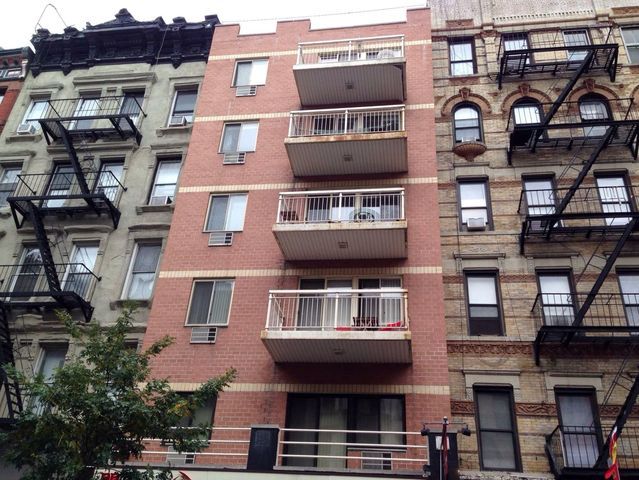
Meanwhile, rusting balcony support brackets on the rear facade were deteriorating toward a potential Department of Buildings "Unsafe" filing, and nobody had the data to quantify the risk or fund the fix.
The Recollab Solution
Rather than commission another static engineering report, the board partnered with Recollab to build a live digital system of record from the ground up. Using Recollab's guided mobile workflow, the property manager photographed the building's scattered paper records: inspection tags, handwritten service cards, boiler-room labels. He fed them into the Recollab Ingestion Engine. In weeks, the platform reconstructed a complete maintenance history that had never existed in any financial statement, identified 18 funded reserve components, and mapped each to its remaining useful life and replacement cost.
Six of those components had zero remaining useful life, meaning the board was already overdue on over $120,000 in deferred maintenance the moment Recollab completed its audit.
The Outcome: Two Paths, One Clear Choice
The board was contributing just $32,000 annually (~$2,667/unit) to reserves, which is less than half of what was needed. With $633,680 in projected expenses over the first decade, the building was heading toward insolvency. Recollab modeled two financial paths:
Path A — Status Quo ($32,000/yr): The reserve balance goes negative in Year 8 when the elevator modernization and stairwell restoration hit simultaneously. The fund never recovers. For 17 consecutive years the building shows a $0 balance, with the deficit reaching as deep as -$287,918. Every major expense triggers an emergency special assessment. The building remains Non-Warrantable throughout.
Path B — The Recollab Plan ($60,580/yr): The reserve balance stays positive in every single year of the 30-year horizon, even through expense clusters exceeding $325,000. The fund's risk rating transitions from High to Low by 2044 and reaches 102% funded by 2054. Zero special assessments. Mortgage eligibility restored immediately.
The net impact per unit: instead of facing repeated emergency assessments of $12,000+, owners absorb a manageable increase of roughly $198/month, and never face a surprise bill again.
The board unanimously adopted the Recollab Plan.

What Changed Immediately
Liquidity Restored: The new budget structure satisfied the Fannie Mae 10% Rule, allowing a unit owner to finally close a sale with a conventional mortgage.
Compliance Control: The property manager now receives automated alerts for inspection expirations (sprinklers, elevator, fire safety), ensuring the "missed deadline" negligence that exposed the building to FDNY violations never recurs.
Insurance Optimization: By digitizing proof of critical system maintenance, the board removed the "unknown risk" factors that drive up premiums, positioning the building to negotiate lower rates at their next renewal.
Asset Protection: The board secured the funding to fix the rusted balconies before they became a safety hazard, preserving the building's structural integrity and insurance coverage.
Future State: Continuous Digital Governance
The building has transitioned from reactive risk to continuous digital governance. Recollab now serves as the central platform for lifecycle management across compliance, financial planning, and asset protection. Inspection reports are captured digitally at receipt and automatically update the compliance calendar. Unit owners can instantly generate "Capital Health" documentation for resale disclosure packages, replacing weeks of paper chasing with verified, buyer-ready financials. And as new invoices and reports are uploaded, the 30-year reserve plan recalibrates automatically — every $1,500 repair, every new inspection — maintaining a live financial health score that ensures continuous mortgage warrantability.
Technical Appendix
How Recollab Found What Others Missed
The platform's deep learning–based OCR and computer vision pipeline didn't just digitize records, it surfaced risks and savings the board never knew existed.
Asset Age Correction: Computer vision models identified the A.O. Smith ProLine water heaters and extracted a handwritten installation date (12-16-16) from the tank label. This corrected the board's assumption that the units were "new," revealing they were approaching mid-lifecycle and would need budgeting within the planning horizon.
Regulatory Risk Detection: Text extraction recovered a sprinkler inspection date (3/20/2020) from a degraded inspection tag, flagging a critical gap in mandatory annual FDNY testing. Without this catch, the building faced violations and potential fines.
Compliance Trail Reconstruction: The building's only elevator maintenance record was a paper card with handwritten entries. Recollab's image-based digitization converted this unstructured log into a verified, auditable compliance trail — replacing negligence risk with automated expiration alerts.
Structural Defect Quantification: Computer vision analysis of rear facade images detected severe rust corrosion on the balcony support brackets. An engineering deterioration model projected just 2 years of remaining useful life, meaning without intervention, the balconies faced condemnation, an "Unsafe" DOB filing, and forced emergency remediation.
Full Component Inventory
The Recollab platform identified and priced 18 funded reserve components across four categories.
Building Exteriors
Component | Useful Life | Remaining Life | Cost Estimate |
|---|---|---|---|
Modified Bitumen Roof Replacement | 20 yrs | 10 yrs | $75,000 – $112,500 |
Facade Repointing (Brick Masonry) | 40 yrs | 17 yrs | $120,000 – $200,000 |
Balcony Railing Restoration | 25 yrs | 2 yrs | $12,000 – $25,000 |
Storefront Entry System (Alum/Glass) | 30 yrs | 8 yrs | $45,000 – $85,000 |
Residential Windows (Building-Wide) | 30 yrs | 8 yrs | $52,800 – $110,000 |
Mechanical, Electrical & Plumbing
Component | Useful Life | Remaining Life | Cost Estimate |
|---|---|---|---|
Elevator Modernization (Controller/Machinery) | 30 yrs | 7 yrs | $175,000 – $300,000 |
Elevator Cab Interior Renovation | 15 yrs | 0 yrs | $25,000 – $50,000 |
Main Switchgear Modernization | 40 yrs | 17 yrs | $30,000 – $50,000 |
Tenant Meter Bank (11 Units) | 40 yrs | 17 yrs | $25,000 – $40,000 |
Common Area Lighting (LED) | 15 yrs | 0 yrs | $8,500 – $15,000 |
Gas Meter Manifold & Valves | 50 yrs | 27 yrs | $15,000 – $25,000 |
Fire Safety & Security
Component | Useful Life | Remaining Life | Cost Estimate |
|---|---|---|---|
Building Fire Safety – Overhaul/Replace | 10 yrs | 0 yrs | $20,000 – $39,000 |
Fire Sprinkler Infrastructure (Piping) | 50 yrs | 27 yrs | $13,500 – $26,500 |
Video Intercom System | 20 yrs | 0 yrs | $12,000 – $22,000 |
CCTV Camera System | 10 yrs | 0 yrs | $7,200 – $14,400 |
Building Interiors
Component | Useful Life | Remaining Life | Cost Estimate |
|---|---|---|---|
Lobby Renovation (Flooring/Paint) | 50 yrs | 28 yrs | $30,000 – $60,000 |
Stairwell Restoration (6 Floors) | 30 yrs | 7 yrs | $15,000 – $30,000 |
Fire-Rated Stairwell Doors | 25 yrs | 3 yrs | $15,000 – $24,000 |
Corridor Walls (Paint/Plaster) | 10 yrs | 0 yrs | $12,000 – $22,000 |
30-Year Cash Flow: Recollab Plan
Year | Reserve Balance | % Funded | Risk | Contributions | Expenses | Balance After |
|---|---|---|---|---|---|---|
2025 | $150,500 | 22.3% | High | $60,580 | $123,550 | $89,932 |
2026 | $89,932 | 15.0% | High | $62,397 | $0 | $154,775 |
2027 | $154,775 | 23.8% | High | $64,269 | $19,247 | $203,375 |
2028 | $203,375 | 29.8% | High | $66,197 | $20,694 | $253,443 |
2029 | $253,443 | 35.5% | Med | $68,183 | $0 | $327,430 |
2030 | $327,430 | 42.6% | Med | $70,229 | $0 | $404,977 |
2031 | $404,977 | 49.1% | Med | $70,580 | $0 | $484,443 |
2032 | $484,443 | 54.8% | Med | $70,933 | $298,658 | $264,198 |
2033 | $264,198 | 41.3% | Med | $71,288 | $171,531 | $168,275 |
2034 | $168,275 | 32.2% | Med | $71,644 | $0 | $244,039 |
2035 | $244,039 | 42.3% | Med | $72,002 | $184,129 | $135,706 |
2036 | $135,706 | 30.4% | Med | $72,362 | $0 | $211,538 |
2037 | $211,538 | 42.1% | Med | $72,724 | $0 | $289,265 |
2038 | $289,265 | 51.7% | Med | $73,088 | $0 | $368,929 |
2039 | $368,929 | 59.6% | Med | $73,453 | $0 | $450,570 |
2040 | $450,570 | 66.2% | Med | $73,820 | $66,284 | $467,277 |
2041 | $467,277 | 69.0% | Med | $74,189 | $0 | $551,647 |
2042 | $551,647 | 74.3% | Low | $74,560 | $325,556 | $309,253 |
2043 | $309,253 | 64.8% | Med | $74,933 | $0 | $391,184 |
2044 | $391,184 | 72.4% | Low | $75,308 | $0 | $475,148 |
2045 | $475,148 | 78.4% | Low | $75,684 | $110,406 | $449,666 |
2046 | $449,666 | 80.1% | Low | $76,063 | $0 | $535,573 |
2047 | $535,573 | 85.1% | Low | $76,443 | $0 | $623,598 |
2048 | $623,598 | 89.1% | Low | $76,825 | $0 | $713,785 |
2049 | $713,785 | 92.4% | Low | $77,209 | $0 | $806,181 |
2050 | $806,181 | 95.0% | Low | $77,596 | $0 | $900,832 |
2051 | $900,832 | 97.2% | Low | $77,983 | $0 | $997,786 |
2052 | $997,786 | 99.0% | Low | $78,373 | $65,715 | $1,030,711 |
2053 | $1,030,711 | 100.5% | Low | $78,765 | $112,296 | $1,017,646 |
2054 | $1,017,646 | 102.1% | Low | $79,159 | $0 | $1,118,145 |